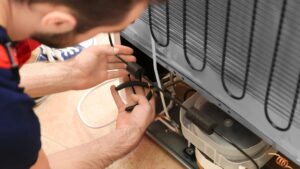
Opening your washing machine to find a drum full of standing water is one of those problems that feels urgent because it is. Wet clothes sitting in stagnant water start to smell fast, and leaving water in the machine for too long can cause its own set of problems. The instinct for most people is to call a technician immediately, and sometimes that’s exactly the right move. But other times, the fix is something you can handle yourself in under ten minutes.
A washer that won’t drain comes down to a handful of causes, and understanding which one you’re dealing with makes all the difference. Some are simple blockages anyone can clear. Others point to a failed component that genuinely needs a professional. Here’s how to work through the situation from the beginning.
What’s Actually Happening When a Washer Won’t Drain
The drain system on a washing machine involves a pump that pulls water out of the drum and pushes it through a hose into your home’s drain pipe. For that process to work, the pump needs to be functioning, the hose needs to be clear and properly positioned, and the machine needs to believe the door or lid is securely closed before it will complete the cycle.
When any part of that chain breaks down, water stays in the drum. The machine may stop mid-cycle with water still inside, or it may complete the wash cycle but fail to spin and drain at the end. Either way, you’re left with a wet load and no clear answer about what went wrong.
The good news is that not every scenario requires a technician. Several common causes are completely manageable on your own, and ruling them out first saves you both time and money.
Things to Check Before Calling Anyone
Start with the drain hose. The drain hose runs from the back of the washing machine to your standpipe or laundry sink. If it’s kinked, pinched behind the machine, or pushed too far into the standpipe, water can’t flow out properly. Pull the machine forward slightly and check the hose visually. It should form a smooth arc without any tight bends. If it’s kinked, straightening it out may resolve the problem immediately.
Check for a clogged pump filter. Many front-loading washing machines have a small access panel near the bottom of the unit that covers a debris filter for the pump. Coins, hair ties, buttons, and small items of clothing collect there over time and block drainage completely. Consulting your owner’s manual will tell you where the filter is and how to open it. Have towels ready when you open it, because water will spill out. Cleaning this filter is a routine maintenance task that most manufacturers recommend doing every few months.
Think about the last load. An overloaded machine can trigger an imbalance detection that stops the spin cycle as a safety measure, leaving water in the drum. Removing some items and restarting the cycle can sometimes clear this without any repair at all.
Check the display for error codes. If your washing machine has a digital display, a drain-related error code is one of the clearest signals the machine can give you. Common codes on front-loading machines include F21, E21, or similar variations depending on the brand. Checking your model’s manual or the manufacturer’s website can tell you exactly what the code means before you call anyone.
If you’ve worked through these steps and the washer still won’t drain, the problem is most likely a failed component that needs professional attention.
When It’s Time to Call a Technician
Signs the Drain Pump Has Failed
The drain pump is the component that physically moves water out of the drum. When it fails, water has no way to exit the machine, regardless of what else is working correctly. The most telling sign of a failed pump is a humming sound during the drain cycle with no water movement. This usually means the pump motor is seized or the impeller inside the pump is broken or jammed.
In some cases, a small foreign object gets past the filter and damages the impeller, causing the pump to hum without producing any flow. In other cases, the pump motor itself burns out from age or repeated stress. Either way, this is a repair that requires disassembling part of the machine to access the pump, which is something best left to a technician who has the right tools and knows what to expect.
Drain pump replacement on a washing machine typically costs between $150 and $300, depending on the brand and model. For homeowners in the Kissimmee area, the washer repair team at Appliances USA Pro can diagnose and replace a drain pump quickly, often in a single visit.
Lid Switch or Door Latch Problems
Washing machines won’t spin or drain if the machine doesn’t detect that the door or lid is properly closed. It’s a safety feature built into every modern washer, and when the switch or latch fails, the machine behaves as though the door is open even when it isn’t.
On top-loading machines, this is called a lid switch. On front-loaders, it’s a door latch assembly. Both can fail mechanically or electrically. The symptom is a machine that fills and agitates normally but stops before the spin and drain cycle, leaving you with a full drum of water at the end.
This is a relatively straightforward repair in most cases. Replacing a lid switch or door latch typically costs between $100 and $200, including parts and labor. It’s also a repair where getting the right diagnosis matters, because the symptom looks identical to a drain pump failure from the outside.
Control Board Issues
A faulty control board is the most expensive and least common cause of a washer that won’t drain. The control board is essentially the brain of the machine, and when it fails, it can prevent the drain cycle from initiating even when the pump and all other components are working perfectly.
Control board issues are usually a diagnosis of exclusion, meaning a technician rules out everything else first before pointing to the board. If the pump is fine, the hose is clear, the lid switch is functional, and the machine still won’t drain, the control board becomes the likely culprit. Replacement costs vary widely by brand but typically fall between $200 and $400 or more for premium models.
How to Manually Drain Your Washer in the Meantime
While you wait for a technician or work through troubleshooting, you don’t have to leave water sitting in the drum. On most top-loading machines, you can pull the drain hose from the standpipe, lower it into a bucket, and let gravity do the work. Have several buckets ready and be prepared to swap them out, since a full drum holds a lot of water.
On front-loading machines with a filter access panel, opening the filter door slowly and placing a flat pan underneath allows water to drain out gradually. It takes patience, but it protects your clothes and prevents the standing water from causing odor or mold issues inside the drum.
Is It Worth Repairing or Time to Replace?
For washers under 10 years old, most drain-related repairs are worth completing. A pump replacement or lid switch repair is a fraction of what a new washing machine costs, and if the rest of the unit is in good condition, there’s no reason to replace it over a single failed component.
If the machine is older and has already had multiple repairs, or if the control board has failed on a unit that’s approaching the end of its typical lifespan, replacement becomes a more reasonable conversation. A technician can give you a clear picture of the machine’s overall condition and help you decide which direction makes financial sense.
For washer repairs throughout the Kissimmee and Orlando area, including Polk County and St. Cloud, Appliances USA Pro provides same-day diagnostics with upfront pricing on all repairs.
About Appliances USA Pro
Appliances USA Pro serves homeowners throughout the Orlando area with fast, honest appliance repair. From Kissimmee washer repairs to same-day service across the region, the team brings the parts and tools needed to handle most repairs on the first visit. There are no surprise charges, no pressure, and no guesswork. If your washer won’t drain and you want a straight answer about what’s wrong and what it costs to fix, book a service visit online or reach out directly.
Frequently Asked Questions
Why won’t my washing machine drain the water out?
The most common causes are a clogged pump filter, a kinked drain hose, a failed drain pump, or a faulty lid switch or door latch. Starting with simple checks, such as inspecting the hose and cleaning the filter, can resolve the problem without a repair call in some cases.
Can I fix a washer that won’t drain myself?
Some causes are completely DIY-friendly, including unkinking the drain hose, cleaning the pump filter, and clearing a minor blockage. If those steps don’t resolve the problem, a failed pump or control board requires professional diagnosis and repair.
How much does it cost to repair a washer that won’t drain?
Costs depend on the cause. Drain hose issues may cost nothing to fix. Pump filter cleaning is also typically a DIY fix at no charge. Lid switch or door latch replacement runs $100 to $200. Drain pump replacement costs $150 to $300. Control board issues run $200 to $400 or more, depending on the model.
Is a washer drain pump expensive to replace?
Drain pump replacement is a mid-range repair, generally falling between $150 and $300 for parts and labor. On a washing machine that’s in otherwise good condition and under 10 years old, this repair is almost always worth completing.
What does it mean when my washer stops mid-cycle with water in it?
This usually points to a drain or spin issue. The machine may have detected an imbalance, a drain blockage, or a component failure that prevented it from completing the cycle. Checking for error codes on the display is a good first step, followed by inspecting the drain hose and filter before calling a technician.
Rafael Roa is an entrepreneur and business leader best known as the CEO of Appliances USA Pro, a trusted appliance repair and installation company serving homeowners and businesses across Central Florida. Through his leadership, dedication, and customer-first mindset, Rafael has helped build the company into a recognized name in the appliance service industry.
With a strong focus on reliability and professionalism, Rafael has guided Appliances USA Pro toward providing fast, efficient, and high-quality repair solutions for major household appliances, including refrigerators, washers, dryers, ovens, and dishwashers. His goal has always been simple: deliver dependable service that customers can trust while creating a smooth and stress-free experience from start to finish.
Rafael’s entrepreneurial journey reflects his passion for solving everyday problems and helping people when they need immediate support. He understands how disruptive appliance breakdowns can be for families and businesses, which is why he emphasizes quick response times, transparent communication, and skilled workmanship. Under his leadership, Appliances USA Pro has built a reputation for same-day service options, honest pricing, and customer satisfaction.
In addition to overseeing daily operations, Rafael Roa is committed to building a strong company culture based on accountability, integrity, and continuous improvement. He works closely with technicians and staff to ensure every customer receives professional and personalized service. His leadership style combines operational efficiency with a genuine commitment to customer care, helping the company continue to grow in a competitive market.